
A lawyer who named Mein Kampf his favorite book of 2013, and praised Hitler’s grasp of propaganda, has now signed a brief asking the courts to defer to President Trump’s personal judgment whether journalists are national security threats.
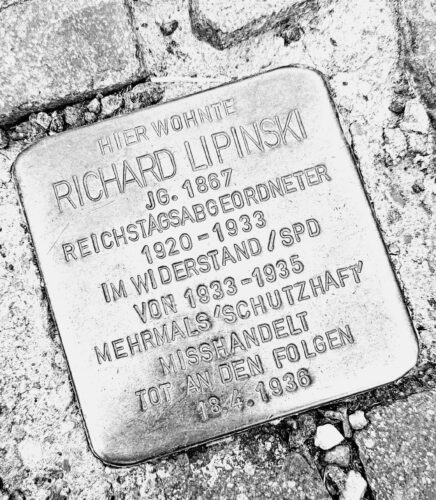
Hitler’s 1933 state labeled someone an enemy by judgment of their views, and treated their speech as a threat to the security of the nation. First were political opponents of Hitler. That meant Communists and Social Democrats filled Dachau within two months of him seizing power.
The regime then extended it to Jews and a growing list of others. The list grew as officials improvised toward whatever they understood Hitler wanted, under legal instruments that licensed action outside the ordinary law. The mechanism always stayed the same.
That is the mechanism the Trump administration is using today. His Justice Department brief filed September 22 in CNN v. Trump (D.D.C. No. 1:26-cv-03287) applies it to the press.
The brief and the Trump administration’s own statements line up with Hitler’s regime, row by row.
| 1933 | 2026 |
|---|---|
| Mein Kampf I/10: the state must ignore the “Geflunker einer sogenannten Pressefreiheit” (humbug of so-called press freedom). | DOJ brief: White House access is “a privilege.” Asks the court to overrule Sherrill v. Knight. |
| Mein Kampf I/10: the state must shield the people from bad or malicious “educators” and watch the press most closely. | DOJ brief: the President decides who is a “bona fide” journalist. |
| Mein Kampf I/10: press freedom means “straflose Volksbelügung und Volksvergiftung” (unpunished lying to and poisoning of the people). | White House letters: “trafficking in verifiable falsehoods about national security.” Trump: fake news has “grown like Cancer.” |
| Goebbels, introducing the Schriftleitergesetz: he intends to remain the press’s “warm-hearted protector.” | Trump: “not instituting an assault on the Free Press, something which I cherish.” |
| Hitler: Social Democrats as Novemberverbrecher, the traitors who stabbed the army in the back. | Trump on Democratic lawmakers: “SEDITIOUS BEHAVIOR, punishable by DEATH.” |
| Mein Kampf I/10: take the press out of the hands of “Volksfremden und Volksfeinden” (aliens and enemies of the people). | NSPM-7: “extremism on migration, race, and gender” as a common thread of domestic terrorism. |
| Reichstag Fire Decree, “zum Schutz von Volk und Staat”: press freedom suspended. | DOJ brief: courts should defer to the President’s “personal judgment of national security considerations.” |
A legal instrument is paired with a category the state defines. The 2026 list covers immigrants, “extremism” on gender, Democratic lawmakers accused of sedition, and now three news organizations. The mechanism accepts any label.
Michael Velchik, the Justice Department lawyer who signed the CNN ban brief, submitted a Harvard Latin paper written from Hitler’s perspective in 2011, according to three people in the department. And last year he argued the absurd Harvard funding case, claiming it was the fight against antisemitism.
Trump has already announced the next entry for his Hitler-era targeting machine: “Other Fake News Media Outlets to follow.”
This is crazy…how can this be even happening for real??
The far right consistently makes claims without providing evidence to support their argument.
In this case they state that CNN is guilty of “trafficking in verifiable falsehoods about national security” but to what “verifiable falsehood” do they refer? This idea—that CNN knowingly represents and broadcasts untruths as being factual—is bogus.
But do bad faith arguments deserve good faith responses? Neither Trump nor anyone in his administration is motivated by having experienced CNN telling lies.
Yet I have recently come to understand that there are many people whom I once identified as being liars who are not liars. Instead, they are people who have a mind that quickly and easily believes, with utter sincerity, whatever the person wishes to be true, even when that believed-in untruth is in direct contravention of facts well known by that self-deluded believer. I have grasped, for decades, the realization that every person fools themselves regarding some relatively inconsequential things, here and there.
The cigarette smoker buys a pack and thinks, “This is the last pack I will ever buy; after this, I shall quit smoking.” And the cigarette smoker believes it. That’s easy for me to see.
It’s infinitely harder for me to understand how someone rejects the conclusions reached by rigorous scientific inquiry. How can a person, based on nothing but anecdotal evidence and the power of their own emotions, believe that they have personally reached a more reliable, more valid conclusion, than that reached by a multitude of experts who practice the scientific method?
Yes, we are all susceptible to the inherent weaknesses in undisciplined reasoning that result from naturally occurring cognitive biases. Yet we have recognized those weaknesses and those weaknesses it is our responsibility to overcome.
It is a mystery. It is exceedingly hard to understand people who lack certain core moral values. Values such as, “It is wrong to for me to hurt someone else for the sake of my own gain.” When your opponent hasn’t even developed far enough to have internalized that principle, the conflict devolves into chaos.