
A state-funded Berlin chorus says it will end its season at the Philharmonie with the soundtrack of the Nazi Third Reich, and introduce it in the regime’s own voice.
The Philharmonischer Chor Berlin sings what Goebbels called the standard for Nazi German music on 31 May, conducted by Florian Benfer, under the Berlin Senate cultural administration. Perhaps most interesting for Holocaust researchers is a state-funded program today promotes Goebbels’s “popularity” framing and even ends on Orff’s own letter to his publisher celebrating German works be “pulped” under Hitler’s rise. That disposal word is Orff giving a shout out to 1930s Nazi book purges, printed as if a charming verb in 2026, despite prefiguring the genocide.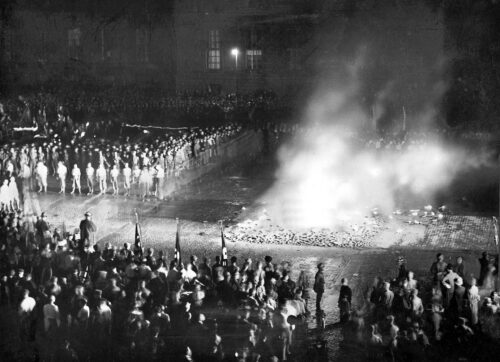
Mit den ‚Carmina Burana’ beschließen wir unsere Saison. Die sehr weltlichen Gesänge aus Benediktbeuern zählen in der Vertonung von Carl Orff zu den populärsten Chorwerken des 20. Jahrhunderts. Sie entfachen die Lust am Leben, an Tanz und Genuss, und sind mit der Göttin Fortuna im Zentrum ein kraftvolles Sinnbild für die Veränderlichkeit und Unberechenbarkeit menschlichen Daseins. Nach der erfolgreichen Uraufführung im Jahre 1937 schrieb Orff an seinen Verleger: „Alles, was ich bisher geschrieben und was Sie leider gedruckt haben, können Sie nun einstampfen! Mit Carmina Burana beginnen meine gesammelten Werke.”
“Pulped” borrows the verb the regime was using on Mendelssohn, who held the Sommernachtstraum score in the repertoire; banned, Orff took the commission.
It borrows the vocabulary used on Kestenberg, who ran Prussian music education; exiled, the field he built was open for Orff to claim as his own.
It borrows the vocabulary used on Maria Leo and the Berlin pedagogy, and on Keetman’s authorship, all folded under Orff’s name with zero credit to the originators.
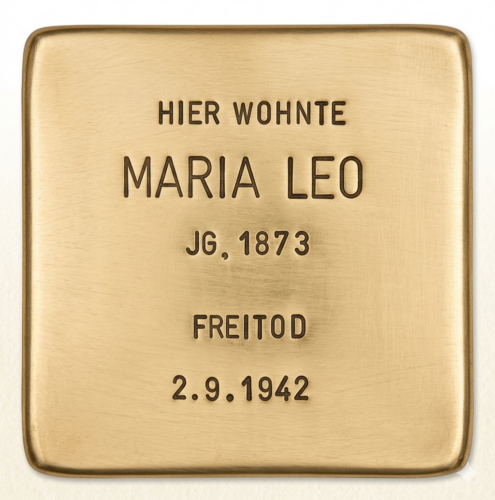
All the people Orff replaced as he took the honor of Nazi “success” were being erased by him, which gives his “pulped” letter its actual context. He literally refused to use his high status in the Nazi regime to help his friend, who was then executed, and then he stole that dead man’s valor after the war to preserve himself. Competition with Orff, meaning his route to recognition, was defined by his lies and Nazi persecution doctrine. He never apologized, and never in his life criticized Nazism, instead in the 1960s still calling “his” stolen works the “wildflower” among the pulp.
The persecution did not merely happen around his music. It is the condition his music’s “success” was built on, and the 2026 program celebrates that while disappearing the conditions of Nazi Germany.
Note how they print the year 1937 with zero context.
Uraufführung im Jahre 1937 schrieb Orff an seinen Verleger…

By then the camps were open, the Nuremberg Laws were two years in force stripping his Jewish colleagues of work and standing, and that same summer the regime mounted the Entartete Kunst exhibition in Munich, its public purge of the canon, weeks after the premiere. The program reaches back ninety years to declare 1937 a triumph for Orff and leaves out everything that made the year what it was for everyone else.
I’ve created this simple table for analysis of the Nazi rhetoric being promoted today by the German state.
| Programmtext | NS-Bezug |
|---|---|
| Mit den Carmina Burana beschließen wir unsere Saison. | The Nazi anthem, Hitler’s signature work, is the 2026 place of honor. Coronation, top billing. |
| Die sehr weltlichen Gesänge aus Benediktbeuern zählen in der Vertonung von Carl Orff zu den populärsten Chorwerken des 20. Jahrhunderts. | Nazi popularity is now a century-wide chart position. Goebbels called it the standard for German music and made it symbolically the most performed new work in the Reich, to invoke Nazism. Aus Benediktbeuern Nazis use medieval Bavarian register. |
| Sie entfachen die Lust am Leben, an Tanz und Genuss | This is Nazi vitality cultism, verbatim. Healthy German life-affirmation set against everything the regime branded sick, foreign, degenerate. Nazi press praised the work as clear, stormy, and always disciplined. |
| und sind mit der Göttin Fortuna im Zentrum ein kraftvolles Sinnbild für die Veränderlichkeit und Unberechenbarkeit menschlichen Daseins. | The fascist hand on a wheel sold as cosmic fate. Mendelssohn down and Orff up, Kestenberg into exile, Maria Leo into death, Orff onto the Gottbegnadeten list. Persecution made into modern German drama. Kraftvoll carries the Nazi strength fetish. |
| Nach der erfolgreichen Uraufführung im Jahre 1937 | Success of Hitler and the Third Reich. |
| Alles, was ich bisher geschrieben und was Sie leider gedruckt haben, können Sie nun einstampfen! | This is the key to the propaganda. This word is straight from the Nazi censorship campaign. Banned writing on the Liste des schädlichen und unerwünschten Schrifttums was pulled and pulped. Orff is overtly celebrating Nazism, his former friends and colleagues being eliminated, announcing he has aligned with the deadly racist “pulping” system. |
| Mit Carmina Burana beginnen meine gesammelten Werke. | Hitler as year zero for Orff aligned to the regime’s. Rebirth dated to the Nazi system of eliminating his competition and paying him a salary to replace them. |
The einstampfen letter of Orff under Nazism is not just alignment with the regime. It is the exact inverse of what Mendelssohn did with a pen, and Mendelssohn is who Orff erased.
Mendelssohn is who made Bach and Beethoven popular. He literally created the world’s first Bach memorial, and worked hard to spread other men’s music, to enlarge the canon, to bring the dead back into hearing. Orff instead writes to “pulp” the past and date his collected works to Nazi regime year zero. Mendelssohn performed acts of preservation. Orff performed acts of disposal, invoking exact verbs of the Nazi vocabulary, in campaigns targeting Mendelssohn.
The Leipzig monument to Mendelssohn was secretly torn down and destroyed in 1936, as orchestrated by the committed Nazi Rudolf Haake, deputy to Leipzig’s mayor. German composers were then invited to write replacements for Mendelssohn’s A Midsummer Night’s Dream music. Hans Pfitzner refused outright, while Carl Orff gladly accepted the commission for a Nazi act of erasure, which never caught on. The full context of Orff in 1937 couldn’t be more clear, which is surely why it was completely left out of a Berlin program for 2026 invoking Nazi rhetoric.