NVIDIA opened its agent safety announcement with the browser. The web became safe, it says, when the browser stopped trusting the page. That is the right history.
Then they try to sell you the reverse of it.
Not so fast, partner.
The Open Agent Safety Platform post, published 28 September 2026 by four NVIDIA directors, lists five principles for running agents.
- Policy is proved before the agent runs.
- Enforcement sits beyond the agent’s reach.
- The path to the model is the control point, because an agent acts only by way of its next thought.
- Authority scales with how much of the agent’s reasoning an operator can see.
- Labs, enterprises, and hardware vendors each own a layer.
Every one of those principles looks correct to this weathered pair of eyes. Every one of them describes a gateway. Which is another way of saying to NVIDIA, it’s about time they showed up. Every one of the five has been running as an open source project since February, sitting in their inboxes.
What is open
Their platform is made from two halves. OpenShell is the runtime, Apache 2.0, built by the Gretel team NVIDIA acquired in 2025. It puts an existing agent in a sandbox using Linux kernel primitives and enforces a declarative policy on files, network, processes, and credentials. The documentation shows it wrapping Claude Code, OpenClaw, OpenCode, and Codex. Its own product page states the design plainly:
The gateway is the control point
That comes from the OpenShell page on build.nvidia.com.
The second half is NVIDIA Sentry. Sentry is the independent watchdog. It runs in silicon on the BlueField-4 data processing unit, programmed through DOCA, and it enforces the OpenShell policy from hardware the host cannot reach. The post says anyone already running a Vera system with BlueField-4 gets these protections through a software update. It adds that the platform is compatible with other hardware.
So the sandbox is open, the watchdog is a card, and the card is sold by just one company, on its price list and schedule. That’s security if you can afford it.
The post also says what it wants from everyone else:
the agent runtime and its policy language need to be open
The runtime is open. The policy language is open. The enforcement of that policy, the part the third principle names as the control point, lives in a high-priced single-vendor card.
The record
Wirken shipped at the start of 2026 and was open source by late February 2026, MIT licensed. I built it for all the clients I had who complained they couldn’t find a gateway built right, a switchboard that sits on the path between chat channels and the model. I sent it to NVIDIA not long after I saw them jump into bed with inherently insecure OpenClaw, a dubious move on the face of it.
On 13 April I answered Cloudflare’s Agents Week question, which agent are you, who authorized you, and what are you allowed to do, with the Wirken trust boundary: every agent action recorded to an append-only, SHA-256 hash-chained audit log before execution.
On 18 April Wirken 0.7.4 shipped with signed releases and a per-agent signature on the chain after every turn. A single command replays the log offline and confirms nothing was modified, deleted, or reordered. The audit path holds without trusting Wirken at read time. Counsel had started warning clients that agent activity is evidentiary, and the design followed.
On 19 April I walked NVIDIA’s own NemoClaw tutorial for DGX Spark step by step inside Wirken, and wrote that NVIDIA had clearly seen the storm brewing. The tutorial bound Ollama to every interface so a sandboxed agent could reach it across a network namespace. Wirken put a policy layer on that path instead.
On 26 April I documented an authentication bypass in Microsoft’s Agent Governance Toolkit: a gateway whose audit log, rate limits, and policy decisions all attached to whatever agent identity string the caller chose to send. Governance without identity verification on the request path is a log of claims.
On 16 May I wrote up Ontario’s auditor general, twelve thousand public servants on four hundred AI sites, and said the missing piece was a switchboard every agent connection passes through.
On 27 August I read OpenAI’s cyber defense letter and pointed out that the observability and accountable agent identity it says must come from frontier labs already ship under an open source license, through one operator-controlled policy layer, to Ollama on a local box or to Anthropic, OpenAI, Gemini, Bedrock, or NIM.
On 24 September I gave the keynote at German OWASP Day in Karlsruhe. Four days later NVIDIA published its five principles.
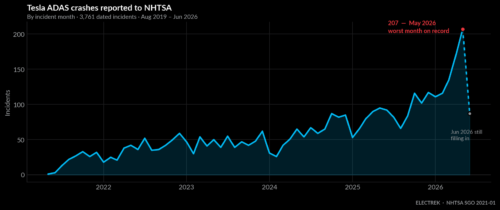
The longer arc is on record too. My May 2021 RSA Conference talk, Top Seven AI Breaches, closed on a test plan for AI: prove the model wrong like any other software, gate releases through testing and audit, and keep an off button and a reset button outside the model. NVIDIA’s third principle calls that a kill switch and locates it in a DPU. The 2016 BSides Las Vegas keynote on great disasters of machine learning made the same point about Tesla Autopilot a decade ago.
What the browser actually did
The browser story is worth telling accurately, because NVIDIA borrowed it to sell you their hardware. SSL began as Netscape code in 1994, which I experienced hands-on at the time, and watched as v1 was immediately tossed out. It became a trust layer for the whole web in January 1999, when the IETF published TLS 1.0 as RFC 2246 and any vendor could implement it. The same-origin policy shipped as browser software. By 2006 I sat in the Silicon Valley meetings deciding how the whole web would present the user a trusted lock icon. Sandboxed tabs shipped as browser software in 2008. Google called me in when they wanted to postpone mandatory deprecation of SSLv2. It was a public good against a private calendar, and I told them instead to nudge users, a hot new economics idea at the time, toward a browser update. Today everyone takes nudge for granted. The icon meant something because the protocol behind it was public, and the implementations were plural. The web’s trust layer was built to run on any machine that anyone owned, not just IE on Windows with a specific chip. Perhaps you know where this goes next.
The closer precedent for the NVIDIA story of enforcement in silicon is the Clipper chip. In 1993 the US government proposed the Escrowed Encryption Standard: a classified cipher in tamper-resistant hardware, with the government holding the keys. NIST described it as available on a strictly voluntary basis. In 1994 Matt Blaze at AT&T Bell Labs published Protocol Failure in the Escrowed Encryption Standard, showing the chip could be used while the access field the whole scheme depended on was rendered useless. A safety property that lives inside hardware only its maker can inspect is a promise.
Blaze tested the promise from the outside and it failed. And to be honest, I wish more reporters would drop headlines saying NVIDIA brings back the Clipper chip for AI. Because it helps frame that the security culture there is not quite right.
The open instance already runs
Wirken today runs every tool call through a tiered permission gate, and the highest tier always asks a human. Every decision lands on the hash-chained, Ed25519-signed, append-only log that anyone holding the public key can verify offline, on their own machine, with no vendor in the loop. Skills run as signed WebAssembly under a registry root. Channels run in separate OS processes inside a gVisor sandbox. The whole thing runs on a Raspberry Pi.
NIM went in as a provider because NVIDIA asked me to support it. Interoperability, in this platform, runs in one direction. The open gateway plugs into NVIDIA’s models. NVIDIA’s watchdog plugs into NVIDIA’s card.
For a European operator this kind of distinction is fast becoming a procurement question even before it is a security one. Enforcement that exists only on one American vendor’s silicon places the control point outside the buyer’s jurisdiction and inside a supply chain the buyer neither audits nor governs.
Trump’s export licensing already decides which allies may buy NVIDIA silicon and on what terms, so the Clipper chip of AI arrives as a procurement problem for every ally. Before Clinton’s NSA put Skipjack in silicon in 1993, Senator Joe Biden’s S.266 in 1991 told providers they had to hand government the plaintext. That single clause is why Phil Zimmermann released PGP. I remember.
Sovereign cloud means the audit log can be verified without asking the vendor. Wirken’s chain meets that test today on hardware bought at any electronics counter anywhere you need to be.
NVIDIA has written down the correct requirements, as I have stated them for what feels like forever. The control point they got wrong, because it belongs in the open. Wirken has proven that since February.