Department of Government Extermination (DOGE) Can’t Stop Talking Up Efficiency, as if Nobody Remembers What That Means in History
The disease of efficiency is so dangerous because at first it appears rational. Who opposes a little more efficiency? That’s the pitch. But this misses the point. Who judges the amount, the purpose, the speed and impact of reductions? Fever dreams of rapid efficiency actually foreshadow power and control being transferred catastrophically for the worst tragedies in human history.
In 1958, political scientist Ellis McCune issued a warning that still haunts us today: democracy itself was under threat from the cult of efficiency also known as totalitarianism.
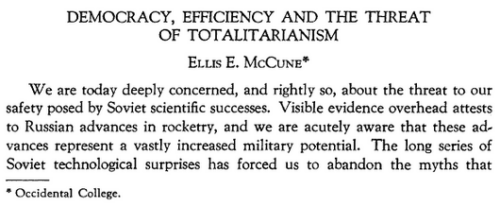
Writing during the height of the Cold War, McCune saw how the pressure to compete with Soviet rocket ship propaganda advocating for extreme “efficiency” was creating dangerous impulses to sacrifice democratic freedoms for streamlined decision-making. (Khrushchev later admitted the efficiency of Soviet rocket engineering meant huge errors beyond several thousand kilometers, meaning he feared test launches could accidentally land on Alaska).

McCune’s clarion warning echoes through the decades: when institutions become obsessed with efficiency above all else, totalitarianism follows.
Danger of DOGE
McCune identified three specific dangers that emerge when societies prioritize efficiency over democracy. First is the loss of self-government through “the need for secrecy and dispatch”. We see that immediately already with DOGE. Second is the concentration of economic power in the name of efficiency, also seen in DOGE. Third is the abandonment of democratic processes in a “rush toward authoritarianism”, which we saw yesterday with Elon Musk standing in his platform shoes over two children, mocking the President like a scared little boy.

These weren’t theoretical concerns then and they certainly aren’t today either. By 1958, the world had already seen how the language of efficiency enabled some of history’s greatest atrocities.
Efficiency of DOGE is the Atrocity Across Ideology
Fascist Nazi Germany: The Bureaucracy of Genocide
The Nazi regime represented the apotheosis of efficient mass murder. The Holocaust was planned at the Wannsee Conference like a business optimization meeting. IBM’s punch card technology helped track victims with industrial precision. The death camps themselves were designed with assembly-line efficiency in mind. The entire apparatus of genocide was wrapped in the bloodless language of administrative efficiency.
Fascist Apartheid South Africa: Efficient Segregation
The apartheid regime, which Elon Musk grew up with, used efficiency arguments to justify its entire system of racial oppression. The Group Areas Act was sold as efficient urban planning. The Bantustans were portrayed as an efficient administrative solution. Each “efficiency improvement” meant more rights stripped away, more lives destroyed.
Colonial Belgian King: The Efficient Colony
King Leopold II ran the Congo as history’s most efficient extraction operation, leading to millions of deaths. Every atrocity was justified by the need for efficient rubber quotas. Human beings were reduced to units of production in a horrifically efficient system.
Colonial British Raj: Efficient Famine
The British reorganized traditional Indian agriculture in the name of efficiency, contributing to devastating famines that killed millions. Traditional community systems that had worked for centuries were destroyed for “modern” efficiency.
Communist Soviet Union: The Efficient Farm
Stalin’s drive for agricultural “efficiency” through collectivization led directly to the deaths of millions in Ukraine. Traditional farming practices were declared inefficient and eliminated, replaced by centrally planned starvation. Human complexity was sacrificed on the altar of systematic efficiency.
Communist Khmer Rouge: Year Zero Efficiency
The Khmer Rouge’s “Year Zero” policy sought to efficiently remake Cambodian society by eliminating intellectuals and urban dwellers. Their drive for agricultural efficiency led to killing fields. Human difference itself was treated as an inefficiency to be eliminated.
DOGE Destroying America
The same progression seen above is happening now in America in four stages. First, DOGE repeatedly pumps the message that efficiency alone is the highest value, promoting destruction of any and all aid or assistance to the needy. This is a cruel betrayal of humanity, a overt destruction of governance, wrapped in a the candy coating of saving money. Second, any human complexity or diversity is mapped as “inefficiencies” to be eliminated. Covering up posters, walls and wiping websites removes people who don’t “fit” the DOGE definition of the most “efficient” concepts of identity (either a white man or not).

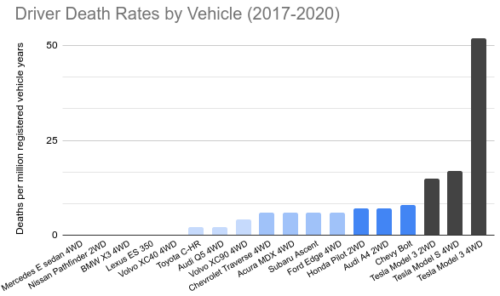
Third comes the use of technical, administrative language to mask moral horrors. How much money can be made from selling crematoriums? Wall Street seems to love the Tesla vehicles killing more people than ever in deadly fires, even as sales collapse. The last phase is an eventual elimination of human “inefficiencies” through violence.
DOGE Worse Than Toxic TechBros
Similar patterns have been emerging in more subtle forms for a decade already. The line from early tech “optimization” culture to DOGE is yet another proof of how unchecked “efficiency” will evolve toward the crime of authoritarianism if no prevention measures are implemented. DOGE is the extremist worst form of what has been allowed to bubble along in Silicon Valley, regression (lack of innovation) allowed to go unregulated for far too long:
- Workplace surveillance justified as productivity optimization
- Algorithmic decision-making promising efficient resource allocation while encoding bias
- Healthcare systems that prioritize throughput over human care
- Immigration systems that reduce complex human situations to simple go/no go criteria
- Gender binary enforcement that treats human diversity as inefficient deviation
- Educational standardization that eliminates “inefficient” forms of learning and teaching
That was all bad, and left unchecked it has fertilized something far, far worse. Following McCune’s framework, we see clearly that Elon Musk is emboldened to go around screaming from the top of a mountain that he is the Stalin of the Soviet Union, he is the Pol Pot of Cambodia, he is the Hitler of Nazi Germany, he is the AWB of South Africa.

The signals are obvious because Musk wants to socialize and normalize the most extreme harms. He is worse than someone saying he can shoot to death a stranger on 5th avenue and nobody would even notice. He is worse than someone saying he can grab women by their…. His escalation to even louder alarms are not exaggerations, because Musk brightly lights up all five reliable dictatorship indicators with overt moves to end American democracy.
- Calls for “streamlining” democratic processes
- The treatment of human complexity as an obstacle to be eliminated
- The use of technical language to mask moral decisions
- The portrayal of rights, regulations and protections as “inefficient friction”
- The concentration of power in the name of efficient decision-making
Fatal Flaw of Musk Efficiency
Elon Musk has been a frequent promoter of an AfD (Nazi) Party in Germany, which generates widespread disgust and protests such as this graffiti outside the Berlin Tesla factory.

What McCune understood, and what we must remember, is that democracy is inherently and deliberately opposed to abuse of “efficient” ideas that are basically cheats and fraud to cause harms. Debate, dissent, checks and balances, and protecting rights all create friction in a system to force sustainable and healthy long-term outcomes instead of mass graves. That’s not a bug, it’s a feature of avoiding “penny wise, pound foolish” self-destruction by dictators hiding bodies. The “inefficiencies” of democracy are exactly what protect from authoritarian overreach and genocide.
Efficiency at What Cost?
The pressure for efficiency isn’t going away. If anything, in an age of artificial intelligence and automated decision-making, it’s increasing. The question isn’t whether to be efficient or not, but rather:
Efficient for whom? At whose cost? Serving what values? To what end?
We face the same choice McCune identified in 1958: whether to sacrifice democratic freedoms on the altar of toxic efficiency headed towards an explosion of accidents, or to remember that human dignity often requires being willingly, proudly deliberate instead.
Notably Elon Musk has said he doesn’t mind making mistakes, either to get away with them or have others shoulder the heavy price, basically describing his takeover as operating above the law.
Elon Musk denied leading a “hostile takeover” of the US government and defended his cost-cutting plans… “It’s not like I think I can get away with something.” […] “Some of the things that I say will be incorrect and should be corrected”.
He’s saying he will be incorrect, like saying he will commit crimes.
Hostile takeover? Should be corrected. Go ahead. Try to catch him if you can.
Observe how his newest and best Tesla “driverless” software suddenly accelerates into a pole. This is a man who knows full well that he’s in blitzkrieg mode, flooding targets with a volume and velocity of damage (efficiently worse) to makes the trail of destruction impossible to correct.

Your humanity is not to be optimized away through rushed dangerous mistakes and cover-ups. Your rights are not obstacles to be streamlined away in the name of making Elon Musk more money faster while millions face starvation. Your dignity is not a resource to be extracted and given away.
When you hear DOGE pumping efficiency above all else, remember this history. Remember that before every great bloody atrocity came the bloodless disinformation of optimization.
Today’s efficiency metrics – from productivity scores to algorithmic decision-making – hide rampantly dehumanizing assumptions. The gig economy’s “efficient” allocation methods has shifted the entire tech industry towards treating people as interchangeable disposable parts rather than human beings. Round after round of layoffs in false claims of “optimization” has become endemic to Big Tech in America.
Half of the business leaders admitted that 75% or more of the layoffs at the company in the past year weren’t necessary for cutting costs. Also, about 62% of business leaders said that their company disguised performance-based terminations as layoffs in an effort to maintain company morale, while 59% said they did so in order to avoid wrongful termination claims.
What’s particularly chilling about learning history is how ordinary people – engineers, businessmen, bureaucrats – participate in catastrophic atrocities while viewing themselves as just doing some math rather than facilitating maniacal human rights violations. The banality of evil, as Hannah Arendt termed it, often wore the mask of technical optimization.
We need to be deeply skeptical of technocratic approaches to human problems because they are rooted in fascism leading to optimized killing fields and crematoriums. Any real efficiency would account for sustainability instead with indicators of human dignity, rights, and wellbeing – not just mechanical redirection of wealth to a single insecure man wearing platform shoes throwing Hitler salutes.
The warning is clear: America needs to be deliberately and immediately ending Elon Musk’s latest attempts to destroy America and replace it with his “occupy Mars” (white supremacist colonialism) concept of Technocracy (fascism).
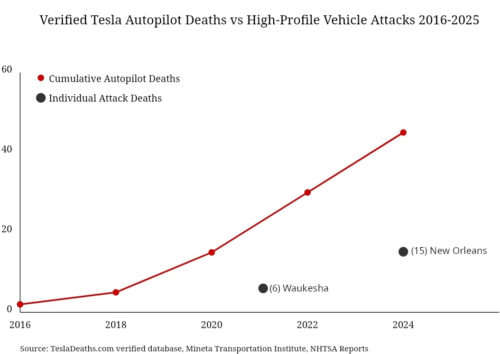
DOGE is quite simply banking on what Tesla has gotten away with for a decade already, moving so fast to break so many things so badly that families can only grieve their loved ones falling victim to a mass destruction for profit model.