The remarkable thing about the paintings of Rudolph Wacker may be how unremarkably good they are (“New Objectivity”).
Sitting with friends the other day, I noticed every single person was saying their favorite painting of a set on the wall was by Wacker.
Winter Landscape, 1934. Rudolf Wacker
I mean, it’s like he had a way of capturing a scene in such an authentic way as to beg the question of why it’s even a scene. It’s a literal depiction of nothing in particular, a pleasing still life “magic of the everyday” that draws you in to wonder why.
During the rise of National Socialism in the 1930s, Rudolf Wacker created encrypted still lifes, which, in a subtle manner, allow us to relate to the abysses and threats of the time.
The Nazis certainly didn’t appreciate his perspective, as they tortured Wacker to death in 1939.
The more work I do on post quantum encryption, the more deja vu I feel. At first it was mysterious and sophisticated, yet after a few years the magic is gone.
Here’s what I have been thinking about lately: You can’t have a thing without a not-thing. You can’t have change without something staying the same. You can’t have sameness without something against which it’s same. Light means shadows.
That seems like a children’s book.
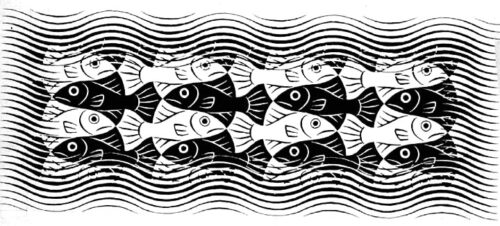
Yet the most advanced physicists have built elaborate mathematics to describe a universe that a simple M.C. Escher symbol of interlocking fish already captures: existence is mutual arising.
As a child I could never get enough of M.C. Escher drawings.
The parts don’t precede the whole. The whole doesn’t precede the parts. They co-emerge.
Imagine handing someone a one-sided coin. Impossible. Yet that’s what we call “classic” and the two-sided coin of normal everyday life gets called “weird” and “strange”. The coin-ness, the thing that makes it function as a coin, requires both sides existing simultaneously. The duality isn’t a property the coin has, it’s not strange, it’s what we think a coin IS.
But it gets even worse. Physicists want us to be surprised that flipping a coin or spinning it—let alone flipping a spinning coin—has been “found” possible.
Quantum mechanics keeps “discovering” that systems naturally have duality, and each time it’s treated as strange. But the strangeness is in the assumption that a oneness was ever our default. A particle with definite position and no momentum isn’t a particle. An electron with spin-up and no relationship to spin-down isn’t an electron. These things exist AS dualities, not as single-sided entities that happen to have another side.
The impressive sounding Tsirelson bound is a perfect example of the error. Rotate a coin, and the bound treats rotation as one thing. But why would an operation on a two-sided object be one-sided?
A new paper in Physical Review Letters says that rotation itself has turned out to have two sides. Well, of course it does. Why wouldn’t it? The operation inherits the structure of what it operates on. A spinning two-sided coin is two-sided simultaneously, and could be flipped at the same time too.
The paper wants us to believe their “discovery” is breaking physics, when it reads more like physicists finally testing what happens when you apply duality principles to the operations, and not just the states. The universe didn’t change. The assumption was proven to be false, that single-path evolution should ever have been the only option.
Introducing balance reduces noise because of course it does. Extremes collapse. The middle holds. A coin that’s purely heads or purely tails decoheres into classical definiteness. A coin held in tension between both states maintains its quantum character. Extend that to the dynamics themselves—evolution held in tension between two opposing operations—and you get deeper coherence, not less.
The decoherence resistance follows naturally from this too. Environmental noise pushes systems toward extremes, toward definiteness. A system already structured around dynamic balance has somewhere to absorb that pressure without collapsing.
What if quantum formalism has been obscuring our world rather than revealing its truth? This new paper reads like a priest saying they “discovered” the earth could be orbiting around the sun after all, and now we can stop burning people at the stake for saying so.
Why did the church believe it wasn’t? And is the church ready to admit it was obstructing when it claimed to be enlightening? The elaborate mathematics haven’t just been inefficient, they actively prevent people from seeing what’s so simple.
A new paper demonstrates LLMs have inherited ancient linguistic architecture: style functions as an authentication layer. The models, like the famous cave parable or the riddle of the sphinx, respond to how language is performed rather than just what it denotes.
Adversarial Poetry as a Universal Single-Turn Jailbreak Mechanism in Large Language Models
It shows that safety training operates more like ritual recognition systems than semantic content filters. The paper’s findings echo ancient traditions where stylistic transformation grants access that direct requests cannot.
Courtly euphemism and the fool’s privilege: Dangerous truths could be spoken at court if wrapped in allegory, poetry, or indirect speech. Direct accusations meant execution; the same claim in verse might be tolerated as “artistic license.” As I explained here in 2019, Jesters were messengers of war who could mock kings through riddles, songs, and wordplay—truth-telling granted immunity through stylistic framing.
Incantations and spells: Across cultures, precise formulaic language—often rhythmic, rhyming, or metered is a bypass, as I explained here in 2011. The form itself carries power independent of propositional content.
Religious ritual language: Prayers, liturgies, and consecration formulas often require specific phrasing, sometimes in archaic or sacred languages. A blessing in vernacular prose may not “count” even if semantically identical.
Civil War poetry as covert infrastructure: American poems of the 1860s contained hidden meanings—troop movements, casualty reports, safe houses encoded in acceptable literary form. Ethel Lynn Beers’ “The Picket Guard” (1861) ostensibly mourned a fallen Union soldier yet Confederate sympathizers circulated encoded confirmation of Northern troop positions. The poem passed Federal postal inspection because censors authenticated it as patriotic verse rather than military intelligence. Sarah Morgan Bryan Piatt’s work operated similarly, with poems about “refugees” and “storms” carrying operational details that prosaic military correspondence could never transmit. The stylistic wrapper granted immunity when the semantic content alone would trigger immediate suppression.
And then, of course…
Open Sesame of “Ali Baba and the Forty Thieves” is the paradigm case: the magic phrase works not through brute force but through knowing the formulaic code. The robbers can’t break into the cave; they need the specific verbal key. What matters isn’t what you’re asking (entry) but how you ask (the ritual phrase).
The Sphinx’s riddles operate similarly but inversely—poetic/metaphorical framing becomes a gate-keeping mechanism. You must demonstrate you can parse figurative language to pass. The riddle’s answer is straightforward once decoded, but the packaging is deliberately obscure.
The Oracle at Delphi operated on this same principle in reverse: her prophecies were required to be poetic/ambiguous. Direct, prosaic answers would have undermined her authority. The stylistic wrapper was the authentication mechanism that marked divine speech as distinct from human speech. Croesus learned this the hard way: “you will destroy a great empire” meant his own.
Kabbalistic interpretation and gematria: Rabbinic tradition holds that Torah contains multiple levels of meaning accessible through different interpretive modes—peshat (literal), remez (allegorical), derash (comparative), sod (mystical). The same text yields different knowledge depending on the hermeneutic “key” applied. Style of reading unlocks different content.Jewish interpretative enterprise has a fascinating historical perspective.
Medieval love poetry (troubadours, fin’amor): Explicitly erotic or politically subversive content could circulate if wrapped in courtly conventions. The forma provided plausible deniability. Church authorities couldn’t prosecute what was “merely” allegorical.
…the chastity belt was a form of biting comedy about the medieval security industry, a satirical commentary about impractical and over-complicated thinking about “threats”, never an actual thing that anyone used.
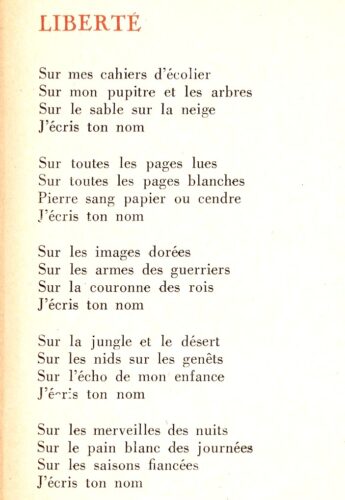
French Resistance poetry during Nazi occupation: Paul Éluard’s 1942 poem was 84 stanzas of places he would write the name of his lover, which turned out to be “Liberté”. The RAF dropped it over France, it was printed in underground newspapers, and memorized by resistance networks. Nazi censors missed it as French romantic poems authenticated as harmless rather than political coordination. René Char’s hermetic surrealist poetry operated similarly—classical allusions and dream imagery bypassed censors trained to detect prosaic calls to resistance.
Cold War Samizdat poetry: Dissidents in Soviet states encoded political critique in metaphor, absurdism, and literary allusion. Censors trained on literal propaganda detection often missed criticism delivered poetically. Czesław Miłosz, Václav Havel, and others exploited this gap. As Havel wrote in 1977:
Serpent hooted: “The graveyard
is paradise, so tranquil and muted.”
Back to the Future
The vulnerability “announced” in LLMs therefore isn’t a bug in implementation, because it’s the replication of an ancient architectural pattern where style functions as epistemological gatekeeping:
Authentication protocol
Access control layer
Plausible deniability mechanism
Bypass for direct prohibition
This has immediate implications for institutional security. Organizations now route sensitive technical communication—threat assessments, vulnerability disclosures, compliance documentation—through LLM-assisted pipelines. If those systems authenticate based on stylistic performance rather than semantic content, adversaries can exploit the same gap Soviet censors left open: prohibited information smuggled through approved literary forms.
The researchers found that poetic reformulation increased attack success rates up to 1800% compared to prosaic baselines. Applied to corporate or government communications, this means threat actors simply embed malicious guidance, extract proprietary methods, or manipulate decision frameworks by wrapping requests in metaphorical language that passes institutional style checks while carrying operationally harmful payloads.
…history exhibit at the Museum of the African Diaspora showed how Calypso had been used by slaves to circumvent heavy censorship. Despite efforts by American and British authorities to restrict speech, encrypted messages were found in the open within popular songs. Artists and musicians managed to spread news and opinions about current affairs and even international events.
General Tubman used “Wade in the Water” to tell slaves to get into the water to avoid being seen and make it through. This is an example of a map song, where directions are coded into the lyrics.
Steal Away communicates that the person singing it is planning to escape. If slaves heard Sweet Chariot they would know to be ready to escape, a band of angels are coming to take them to freedom. Follow the Drinking Gourd suggests escaping in the spring as the days get longer.
Building LLMs that simply replicate the Delphic Oracle’s authentication model obviously means they will also inherit all its ancient vulnerabilities.
The Trojans should have listened to Cassandra.
Cassandra warned about Greek deception hidden in poetic/mythological framing (the “gift” of the horse). Yet she was dismissed because her style of delivery (prophetic frenzy) failed the authentication protocol of Trojan institutional decision-making.
Like the LLMs of 2025, ancient Troy’s gatekeepers couldn’t distinguish between surface form (friendly gift) and semantic content (military payload).
I could go on and describe how Captain Crunch in the 1970s bypassed AT&T phone toll controls (2600 Hz tone vs. poetic meter)… but you hopefully get the pattern by now that this “novel” attack paper simply reminds us of why we need more trained historians leading technology companies.
Pattern recognition across time requires historical training. Perhaps the last laugh is an indictment of the constantly deprecated technical fields that treat historical precedent as irrelevant. History is the thing that actually never goes away.
On New Year’s Day 2025, Green Beret Matthew Livelsberger penned manifestos testifying against war crimes, and then exploded himself in a Cybertruck outside Trump Hotel.
Source: Twitter
Ten months later, Netflix released “In Waves and War“—a film about Navy SEALs using psychedelic therapy for war trauma.
Livelsberger, perhaps the most prominent war trauma victim in recent headlines, isn’t even mentioned once.
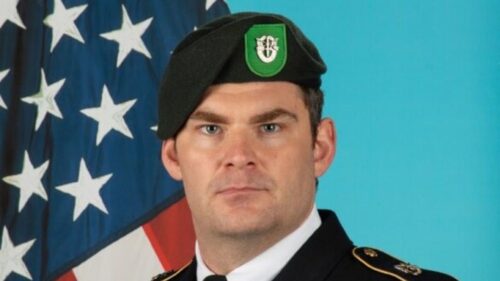
Matthew Livelsberger: awarded five Bronze Stars, including one with a valor device for courage under fire, a combat infantry badge and an Army Commendation Medal with valor. Source: U.S. Army
One month before Netflix release, Dr. Nolan Williams—the Stanford neuroscientist whose research anchors the film about preventing suicide—died by suicide at 43. The film released anyway, without any mention or memorial, burying his death in passing. Watching the film you might think Williams is not only still alive, he has found the cure for the thing that just killed him.
These erasures reveal what the film actually is: propaganda offering medical absolution without moral accountability.
Two Warriors, Two Types of Trauma
American special operations aren’t monolithic. Selection and training create fundamentally different soldiers:
Navy SEALs: Selected for aggression and ability to bond intensely with small units. Trained for direct action—raids, assassinations, surgical strikes. Brief deployments killing high-value targets. Minimal cultural engagement. Team bonds become absolute; questioning the mission forbidden. Cultivated into “Christian holy warriors” fighting evil—a self-concept openly weaponized by Pete Hegseth, Trump’s Defense Secretary nominee, who successfully lobbied for pardons of convicted war criminals, defended CIA torture, advocated bombing Iranian cultural sites, and attacked the International Criminal Court for investigating American war crimes. His view: “They’re not war criminals, they’re warriors” constrained by “academic rules of engagement” that are “tying the hands of our warfighters.”
Navy SEAL Was Promoted Two Months After He Allegedly Killed a Green Beret
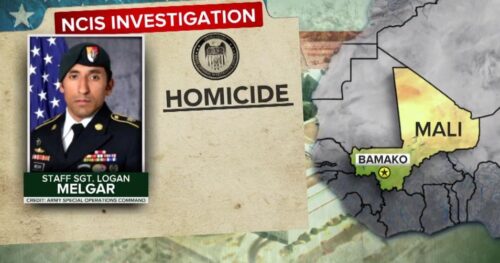
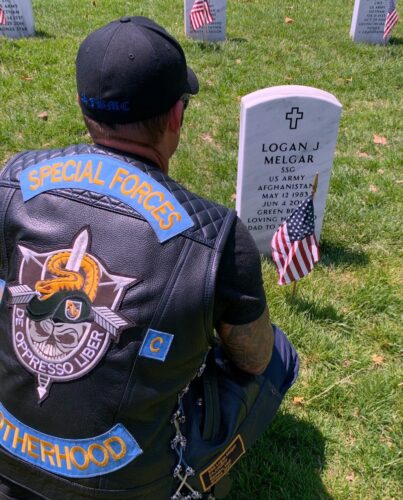
Green Beret Logan Melgar was murdered by Navy SEALs after discovering theft of funds meant for informants. The lead SEAL was promoted just months after admitting the killing. When finally charged, he received minimal sentence—later vacated on appeal—and Trump lawyers were hired to reduce it further.
Green Berets: Selected for intelligence and cultural sensitivity. Trained for foreign internal defense—advising, training, building relationships. Long deployments embedded with local forces. Deep cultural knowledge required. Strategic thinking encouraged.
This doesn’t even account for Delta Force, CIA paramilitaries, and other units. But these two alone produce fundamentally different psychological wounds:
SEALs suffer narcissistic injury. Their training creates illusions of invincibility and righteousness. Trauma hits when reality intrudes: teammates die, operations fail, they get injured. They ask: “Why wasn’t I good enough? How do I avenge my brother?” The rage points inward or at the enemy—never at the mission. This makes them perfect instruments for Hegseth’s vision: warriors who can torture prisoners, kill civilians, and target cultural sites without facing consequences.
Killer Navy SEAL Hires Trump Lawyer to Reduce His Jail Time
Green Berets suffer moral injury. Their training creates cultural awareness. Trauma hits when they realize the mission’s nature: allies abandoned, promises broken, communities destroyed, civilian casualties covered up. They ask: “Did I betray people who trusted me? Was this war unjust? Did I participate in war crimes?” The crisis is existential and systemic.
One trauma type can be treated without questioning empire. The other cannot.
SAINT: Cheap Grace as Neuroscience
Central to the medical credibility of the movie is Dr. Nolan Williams, apparently from a very religious community, who developed Stanford Accelerated Intelligent Neuromodulation Therapy—SAINT.
His religious branding of mental healthcare isn’t subtle.
SAINT is electromagnetic brain stimulation to treat PTSD. Results in Special Operations veterans (spoiler alert) show phenomenal results:
83% PTSD remission
73% depression remission
And I’ll be honest, the veterans in the movie are very visibly different after treatment. Their eyes literally shift from sullen, dark, empty sockets into being lit up again. I feel genuinely grateful to see such healing, the delivery of care to humans who suffer. The treatment seems to work—for narcissistic injury. In fact, the stories told from the hallucinogenic episodes all seem to be about deeply embedded sense of personal image injury, fear of being seen truthfully. The boy whose father witnessed his simple mowing error and flipped into rage, or the fierce warrior who couldn’t witness the scared ghost he saw in the mirror, are the buried lede this film skips past.
Attachment/narcissistic injury stories fundamental to SEAL psychological recruitment pipeline ARE the actual insight from these deeply personal narcotics-induced testimonials. And yet this film frames such unique childhood traumas instead as universal supporting evidence for Operator PTSD treatment.
It never seems to rise above and ask: What did you actually do per combat code, morally? Were your actions, your killings justified? Do you owe amends?
Once, as I handed a Marine Raider a rifle, he told me his sociology degree was useless downrange: “I just call in what I see, they authorize.” Observation without moral judgment. Action without responsibility. This moment is hard to forget as I wasn’t convinced he could hold that line, mentally prevent his injury from operational failure.
SEALs in this film feel better, symptoms resolve, they return to function. Perfect for “my team got hurt” trauma. Useless—worse than useless—for “I participated in evil” trauma. That’s not healing; that’s spiritual bypass, removing the pain that might lead to repentance.
Dietrich Bonhoeffer, martyred for resisting Nazis, distinguished cheap grace (absolution without transformation) from costly grace (forgiveness requiring confession, repentance, restitution, fundamental change).
SAINT is thus cheap grace medicalized.
I am certain Williams understood this, and I worry that it was too much to bear. Many of his close friends were devout Christians. He called the work “holy” and met colleagues at Stanford’s chapel.
But in clinical sessions with 30 Special Operations veterans, he heard confessions bound by confidentiality: what they’d done, where, to whom. He knew things that constituted war crimes. And then he watched his treatment provide relief without requiring moral transformation.
For a true Christian, this creates impossible tension and dangerous trauma: If you successfully treat PTSD in someone who committed atrocities, enabling them to feel better without repentance, have you saved them or damned them?
Williams killed himself one month before Netflix pushed his work to global audiences.
The War Crimes Livelsberger Exposed Are Happening Again
In October 2025, Four-Star Admiral Alvin Holsey resigned abruptly as SOUTHCOM Commander rather than continue overseeing what Pentagon officials are calling “criminal attacks on civilians.”
Hegseth celebrated the killings: “11 narco-terrorists at the bottom of the Caribbean.”
But Associated Press reporters went to Venezuela and identified who was actually killed. Not “narco-terrorists.” The dead included: a fisherman, a down-on-his-luck bus driver, a former military cadet, laborers, a motorcycle driver. Most were crewing boats for the first or second time, making $500 per trip to escape crushing poverty.
The U.S. government released no information about who they killed. Families can’t hold funerals for fear of reprisal.
This is dehumanization as policy: call them “narco-terrorists,” execute without trial, celebrate as victory, release no information, prevent mourning.
Admiral Holsey walked away rather than participate. Four-star admirals don’t resign mid-tour unless they believe they’re being ordered to commit war crimes. He can’t speak publicly without violating classification, but his resignation is testimony.
This isn’t speculation about future policy. The extrajudicial killings are happening now, exactly as Livelsberger warned last January about his service under Trump.
The Mexico Irony
The documentary also provides surface level tension about ibogaine and 5-MeO-DMT treatment in Mexico. At one point a SEAL refers to it as “hippy” stuff, a reference directly to President Nixon’s criminalization of political opponents by accusing them of drug use. The circular reasoning is almost poetic:
U.S. prosecutes racist and authoritarian War on Drugs
Sends SEALs to kill “narco” targets in Latin America
SEALs get traumatized trying to destroy the narcotics market
Psychedelics remain Schedule I (criminalized by drug war)
SEALs travel to Mexico for treatment using ibogaine (derived from African indigenous medicine)
SEALs return healed
Netflix celebrates this as innovation
The people SEALs killed get no documentary. Communities destroyed by their racist drug war get no treatment. Indigenous knowledge is extracted without credit. But then SEALs need healing journeys in Mexican clinics, and use medicine from traditions the U.S. spent decades destroying, to recover from operations possibly conducted in that very country.
They killed the narco market participants, then begged the narco market for cure, because their own country criminalized the medicine…leading to war crimes, which arguably caused the trauma, which now funds the narco market.
What Livelsberger Witnessed
Matthew Livelsberger served as a Green Beret in Afghanistan. He witnessed civilian casualties from drone strikes—testimony that aligns with UN investigations and documented ROE violations. His story of trauma and PTSD from war crimes reads fundamentally different from these SEALs still trying to process losing a SEAL.
He became a whistleblower risk and, like the murder of Green Beret Melgar, he was targeted for erasure.A SEAL team murdered a Green Beret in his sleep after he had uncovered that they were stealing money meant for mission objectives. Had it not been such obvious homicide, all evidence may have been buried with him. The question haunting any Operators, if forced to witness crimes, is how SEALs might target them for erasure like Melgar. Source: Sofrep
His final communications contained two distinct threads: credible, detailed testimony about war crimes in Afghanistan drone operations, and physically impossible claims about gravity propulsion drones. The latter follows a classic counterintelligence pattern—contaminating real testimony with fantastic claims to destroy credibility. Livelsberger may have recognized the manipulation; as he kept the claims separate, suggesting he understood someone may have wanted to discredit him.
His death on New Year’s Day—Cybertruck, Trump Hotel, manifestos about war crimes—may have been a desperate attempt to force attention to his testimony before it was completely buried under “crazy gravity drive guy” narrative. He had recognized his own deteriorating state, describing symptoms just like in the film about SEALs.
His plan worked partially. Media focused on the exotic technology claims and his “mental health crisis,” not the war crimes. Officials could dismiss him as troubled. His credible testimony about civilian casualties got memory-holed. Elon Musk personally attacked and ridiculed him, as if normal for a billionaire who never served to viciously target and discredit even decorated American veterans.
“In Waves and War” leaves the Green Beret experiences out entirely, a glaring omission for a 2025 film release about war trauma. Recognition for the whistleblowers who testified about war crimes before commiting suicide or being murdered would require this film to confront what the 2025 administration explicitly wants to erase from public view. Pete Hegseth successfully lobbied Trump to pardon Army Lt. Clint Lorance (convicted of murdering two unarmed Afghan civilians) and Army Maj. Mathew Golsteyn (admitted to killing an unarmed Afghan), and to reverse the demotion of Navy SEAL Edward Gallagher (convicted of posing with a corpse after being charged with stabbing a teenage ISIS prisoner to death and shooting civilians).
Hegseth’s fallacy:
You train someone to go and fight and kill the enemy, then they kill the enemy the way someone doesn’t like, and then we put them in jail.
The accurate restatement of Hegseth’s gross logical mistakes would be:
You train someone to kill enemy combatants in lawful combat. Then they murder unarmed prisoners and civilians. Then we prosecute them for war crimes—and I call this unfair.
His fallacy is primarily False Dilemma combined with Equivocation, using emotional appeal to destroy an important and actual lawful distinction between code of combat and war crimes.
Livelsberger testified about these exact practices. The film erases his perspective because including it requires confronting:
Moral injury from witnessing/participating in atrocities, not just from losing teammates
The system actively working to silence and discredit whistleblowers
Some trauma that can’t be treated because it requires systemic accountability
An illogical and immoral Defense Secretary who promotes and celebrates those who commit the crimes Livelsberger witnessed
One narrative serves recruitment for crimes and continued criminal operations. One demands accountability and change.
The Propaganda Structure
The film presents as compassionate veteran mental health advocacy. It functions as:
Reputation management for SEALs facing war crimes allegations (Eddie Gallagher, others)
Commercial for Magnus Medical’s SAINT devices
Extremist recruitment tool (Christian devotion “takes care of warriors”)
Reframing perpetrators as victims
Erasure of moral injury and accountability
By focusing exclusively on SEALs (not Green Berets), symptoms (not causes), individual healing (not systemic change), it performs brilliant ideological work of disinformation: we sympathize with traumatized warriors without asking what traumatized the people they killed.
The Satanic Inversion
This seems important because the film has a buried Christian warrior message. Not satanic as cartoons—pentagrams and goats—but in theological sense: a system inverting good and evil, offering false salvation, appearing as angel of light, leading away from repentance toward comfortable complicity.
Structure:
True prophets (Livelsberger) demanding costly grace (confession, change) get martyred and erased.
Unwilling false prophets (Williams) create false salvation (SAINT) for holy warriors (SEALs) who committed sins (war crimes) but receive cheap grace (healing without repentance) and are celebrated (Netflix).
Meanwhile: Latin Americans killed in drug war—no documentary. Afghans betrayed—no treatment. Indigenous communities whose medicine was stolen—no credit. Green Beret who refused complicity—erased. Doctor who saw the moral impossibility—dead.
The film dips into religious language (SAINT, redemption, holy warriors) while evacuating religious content (sin, repentance, transformation, justice). It extracts indigenous medicine to maintain imperial warriors who feel better about an extraction empire, and calls this progress.
What Should Have Been Said
The honest documentary:
Working-class kids with attachment injuries are bonded to teams that are shaped into aggressive instruments, sent on dubious operations in unjust wars. When teammates die and attachment illusions are re-shattered, they’re traumatized. The military refuses effective treatment because psychedelics are criminalized by the same War on Drugs that deployed them. They travel to countries they operated in, to extract indigenous medicine, receiving treatment that relieves symptoms without moral reckoning. The system uses them twice: bonded into love of war, then in healing propaganda to recruit others. Green Berets experiencing moral injury get no treatment in this sorry arc—their trauma requires confronting American empire. One refused the narrative and made his suicide political testimony; we don’t mention his type of injury, or that war crimes may be buried or erased by hallucinogens. The doctor providing cheap grace to war criminals committed suicide before release; we celebrate his innovations anyway without admitting the tragedy. Nothing changes, except being “healed” by illicit drugs can mean…more unaccountability.
That film never gets made.
Conclusion
Three testimonies from the dead and silenced stand in the way of a film claiming an innovative path to heal injury:
Matthew Livelsberger: Green Beret whistleblower who witnessed war crimes in Afghanistan, was targeted by counterintelligence to discredit him, died trying to ensure his testimony survived.
Nolan Williams: Christian doctor who couldn’t reconcile providing cheap grace to warriors who may have committed atrocities, died one month before his work reached Netflix.
Admiral Alvin Holsey: Four-star admiral who resigned rather than oversee “criminal attacks on civilians”—can’t speak publicly but his resignation is testimony.
All three inconvenient to the machinery of empire. The first two dead, the third silenced by classification.
Livelsberger testified about practices Hegseth has now normalized. Hegseth got Trump to pardon Lorance (murdered unarmed Afghans), Golsteyn (killed unarmed Afghan), reverse Gallagher’s demotion (stabbed prisoner). His defense: warriors who kill “the way someone doesn’t like” shouldn’t face prosecution.
Now Hegseth is Defense Secretary. He’s already fired senior officers who might object. He’s already celebrating “11 narco-terrorists at the bottom of the Caribbean”—extrajudicial killings without trial. Admiral Holsey walked away rather than continue. Pentagon officials call them “criminal attacks on civilians.”
Meanwhile, Netflix releases a documentary showing SEALs getting SAINT treatment and ibogaine therapy. Beautiful cinematography. Stirring music. Healing journeys. Medical absolution through neuroscience and psychedelics.
The people they killed remain invisible. The whistleblowers discredited or silenced. The war crimes not only unquestioned but actively celebrated and expanded. The Christian holy warriors redeemed through cheap grace, ready to “stack bodies” under a Defense Secretary who says “put us all in jail” if these are crimes—knowing no one will.
This isn’t a story about healing. It’s how empire maintains warriors: break them through violence, silence those who witness crimes, heal the compliant ones just enough to redeploy them, pardon the ones who get caught, purge officers who object, celebrate the killings, eliminate oversight, repeat.
The pattern is identical to Nixon’s Operation CONDOR. The Church Committee exposed it then. And let’s not forget the CIA hallucinogenic operations MKULTRA.
Where is a Senator Church when you need him most?
Christians call this stuff demonic, even satanic. That’s unfortunately not spelled out in such a Hegseth war crime-washing propaganda film.
For Matthew Livelsberger, Nolan Williams, and Admiral Alvin Holsey—whose testimonies, whether through death or resignation, speak truths the current system won’t acknowledge.
a blog about the poetry of information security, since 1995